
What Is AccInt and What Makes It Worth Using?
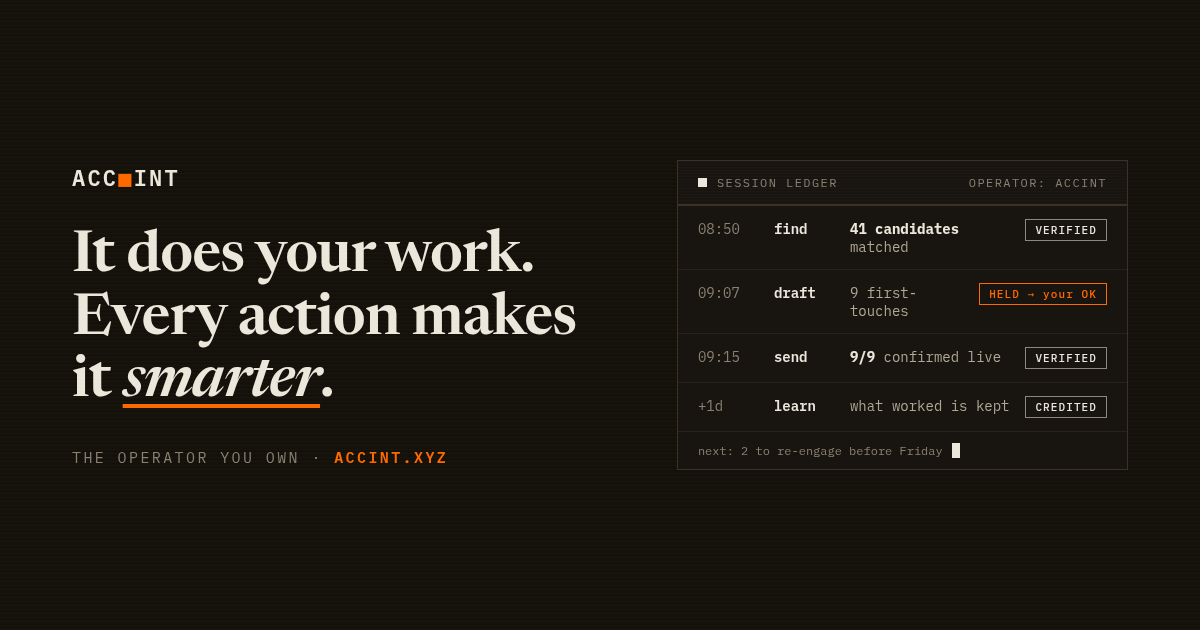
AccInt is a local-first Work Model for recurring AI agent work. It gives agents scored memory, commitments, outcomes, and credit assignment so useful context compounds from real results across Claude Code, Codex, OpenCode, Cursor, and MCP-capable workflows. It is for developers and teams who want agent memory grounded in what actually worked, not just raw transcript recall.

What makes AccInt unique?
AccInt is easiest to appreciate when you move beyond feature lists and look at the actual job it needs to do. AccInt is a local Work Model that helps AI coding agents learn from real outcomes.
AccInt Features We Would Actually Use
Scored retrieval and reusable paths
Scored retrieval and reusable paths matters once you are using AccInt in a real process instead of a demo. We found it most useful when teams needed to keep data moving without adding manual cleanup between apps.
Outcome-based credit assignment
Outcome-based credit assignment matters once you are using AccInt in a real process instead of a demo. We found it most useful when teams needed to keep data moving without adding manual cleanup between apps.
Local-first SQLite substrate
Local-first SQLite substrate matters once you are using AccInt in a real process instead of a demo. We found it most useful when teams needed to keep data moving without adding manual cleanup between apps.
MCP integration
MCP integration matters once you are using AccInt in a real process instead of a demo. We found it most useful when teams needed to keep data moving without adding manual cleanup between apps.
Claude Code, Codex, Cursor, and OpenCode workflows
Claude Code, Codex, Cursor, and OpenCode workflows matters once you are using AccInt in a real process instead of a demo. We found it most useful when teams needed to keep data moving without adding manual cleanup between apps.
How Much Does AccInt Cost?
AccInt uses a free pricing model. We always recommend checking the official site before you commit because pricing, limits, and support terms can change.
Best for teams evaluating AccInt before they commit more budget or process design time.
- Official pricing may vary by usage, seats, or volume
- Use the live site for the latest billing details
- Check limits before moving mission-critical workflows
- Model one real workflow before upgrading
- Confirm support and compliance needs with the vendor
Prices verified July 2026. Check the official site for the latest pricing.
Is AccInt Right for You?
Operations Teams
A natural fit when the work involves handoffs, routing rules, approvals, and a lot of repetitive busywork sitting between systems.
Consultants
Good for client delivery if you want reusable workflow blueprints and enough flexibility to handle weird edge cases without writing everything from scratch.
Internal Platform Teams
Useful when APIs, webhooks, and custom requests matter almost as much as no-code speed.
Very Small Personal Automations
Less ideal when the entire use case is a couple of basic personal automations that do not need deep logic or oversight.
Our AccInt Rating
We scored AccInt based on real-world usefulness, not just surface-level features. In our experience, the tool makes the most sense when the use case is clear and the workflow justifies its tradeoffs.
HyzenPro Verdict on AccInt
When we reviewed AccInt, the product felt strongest in the exact places where generic directory blurbs usually stay vague: day-to-day usability, pricing tradeoffs, and how much room the workflow gives you once the easy setup is over.
We found that AccInt is worth considering when the job clearly matches its strengths, especially if your team cares about repeatability and wants to keep manual cleanup out of the process.
In our experience, the decision comes down to whether the product solves a real operational problem or just looks good in a feature grid. AccInt is easier to recommend when the use case is concrete and the team is ready to use it seriously.
AccInt FAQ
Top AccInt Alternatives
If AccInt is close but not quite right, these are the tools we would compare next.