
AI General Tools · Head to head
AIReiter vs Liquid.ai
Both are listed under AI General Tools. AIReiter is free plan, paid upgrades; Liquid.ai is enterprise / contact sales. Their listed features do not overlap, so the choice comes down to what you need done.

At a glance
| AIReiter | Liquid.ai | |
|---|---|---|
| Pricing | Free plan, paid upgrades | Enterprise / contact sales |
| Free to start | Yes | No |
| Category | AI General Tools | AI General Tools |
| Features listed | 4 | 6 |
Features compared
Only AIReiter
- Text generation through one API
- Image generation through one API
- Video generation through one API
- Integrations with OpenAI and Anthropic
Only Liquid.ai
- Liquid neural network architecture.
- Efficient edge deployment.
- Adaptive model behavior.
- Enterprise-grade APIs.
- Custom model training.
- Superior energy efficiency.
Strengths and drawbacks
AIReiter
- + One API covers text, image, and video
- + Freemium and pay-as-you-go pricing
- − Paid usage is pay-as-you-go beyond the free tier
Liquid.ai
- + Novel architecture with strong research backing.
- + More efficient than traditional models.
- + Better interpretability.
- − Still relatively new technology.
- − Enterprise pricing only.
- − Limited public documentation.
Which one to pick
Choose AIReiter if
- You want to start without paying — AIReiter has a free option, Liquid.ai does not.
- You need text generation through one API.
- You need image generation through one API.
- You need video generation through one API.
Choose Liquid.ai if
- You need liquid neural network architecture..
- You need efficient edge deployment..
- You need adaptive model behavior..
About each tool
AIReiter
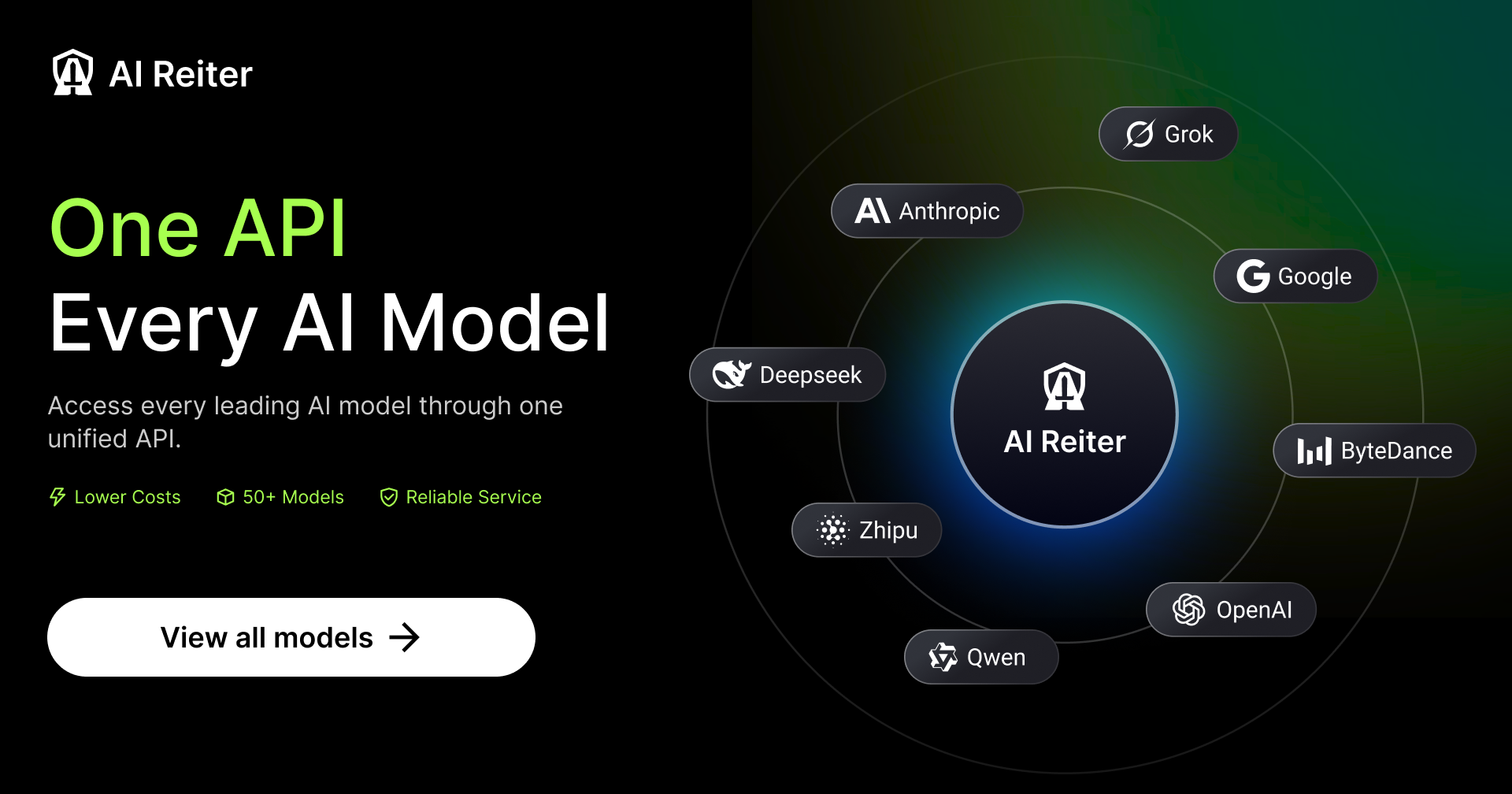
Unified AI API for text, image, and video generation. Freemium and pay-as-you-go for developers and creators. Integrations with major AI models including OpenAI and Anthropic.
Liquid.ai
Liquid.ai develops next-generation foundation models based on liquid neural networks technology from MIT. These models offer greater efficiency, adaptability, and interpretability compared to traditional transformer architectures.