New this week:Claude Sonnet 5 Review: Benchmarks, Pricing & How It Compares to Opus 4.8
Newsletter·hyzenpro.com
HyzenPro
AI Tools Directory
Blog
Compare
Find Tools
About
Contact
Submit AI tool

Popular Categories

  • AI Video ToolsEditors, generators, captions
  • AI Writing ToolsContent, copy, and SEO writing
  • AI Coding ToolsAssistants for developers
  • AI Image ToolsArt generators, editors
  • AI AutomationWorkflow and task automation

Discover

  • All ToolsBrowse the full directory
  • Find ToolsTake the guided matcher quiz
HyzenPro
AI Tools DirectoryCategoriesBlogCompareFind ToolsAboutContact
Submit AI tool
HyzenPro

Independent reviews and side-by-side comparisons of the best AI tools for creators, marketers, developers and small teams. Reader-funded — never pay-to-play.

Featured Across Leading Platforms

Trustpilot logoProduct Hunt logoG2 logoIndie Hackers logoMedium logo

AI Tools

  • AI Tools Directory
  • AI Video Tools
  • AI Writing Tools
  • AI Coding Tools
  • AI Image Tools
  • AI Automation

Compare

  • Side-by-side Compare
  • Find Tools Quiz
  • Editor's choice
  • Buyer's quiz

Resources

  • Blog
  • How we review
  • Submit AI Tool

Company

  • About HyzenPro
  • Contact
  • Advertise
  • Privacy Policy
  • Terms of Service

© 2026 HyzenPro. All rights reserved. AI tool ratings are based on independent testing.

PrivacyTermsContactAdvertiseSubmit Tool

HyzenPro is an independent publication. Brand names and logos are property of their respective owners.

HomeBlogGPT-5.6 Sol Preview
AI ToolsAI Chatbots
OpenAIJuly 2026Preview

GPT-5.6 Sol Preview: Benchmarks, Pricing, Access, and How It Compares to Claude

OpenAI's newest flagship is here — but you probably can't use it yet. Here's what's actually confirmed about GPT-5.6 Sol, Terra, and Luna.

HyzenPro EditorialJuly 1, 20268 min read
Affiliate disclosure: HyzenPro may earn a commission when you click some tool links. Our reviews, comparisons, and recommendations remain editorially independent and are based on research, hands-on testing, pricing checks, and practical fit.
Preview
Access status
3
Model tiers: Sol / Terra / Luna
$5/$30
Sol price per MTok
~20
Reported partner orgs

On June 26, 2026, OpenAI began a limited preview of the GPT-5.6 series: Sol, its new flagship model, Terra, a balanced everyday model, and Luna, a fast and inexpensive tier. The headline framing is agentic coding and cybersecurity — Sol is positioned as OpenAI's strongest model yet for long-horizon terminal work and defensive security tasks. The catch is availability: this is not a normal launch. Access is currently limited to a small, government-coordinated group of trusted partners, and OpenAI has not announced a firm date for general availability.

This review sticks closely to what OpenAI stated in its official preview post. Where specific benchmark percentages are cited, they come from outlets that reviewed OpenAI's published launch-day chart, since OpenAI's own post text describes results qualitatively ("sets a new state of the art") without printing every figure inline — that distinction is flagged throughout.

What Is GPT-5.6 Sol, Terra, and Luna?

GPT-5.6 introduces a naming split OpenAI hasn't used before: the number identifies the model generation, while Sol, Terra, and Luna are durable capability tiers that can each advance on their own schedule going forward.

  • Sol — the flagship. Positioned for agentic coding, long-horizon reasoning, biology workflows, and cybersecurity.
  • Terra — a balanced everyday model. OpenAI says it's competitive with GPT-5.5 while costing about half as much.
  • Luna — the fastest, cheapest tier, aimed at high-volume, latency-sensitive workloads like classification and chat.

GPT-5.6 also introduces two new reasoning settings: a max effort level that gives Sol more time to reason on hard problems, and an ultra mode that dispatches subagents to parallelize complex, long-running work — similar in spirit to the multi-agent orchestration approaches showing up across the frontier lineup this year, including Claude Opus 4.8's Dynamic Workflows.

Benchmarks: What OpenAI Actually Published

OpenAI's preview post leads with three capability areas: agentic coding, biology, and cybersecurity, with fuller safety and preparedness evaluations reserved for the system card. The one benchmark chart in the launch post itself is Terminal-Bench 2.1, an agentic coding benchmark that tests command-line workflows requiring planning, iteration, and tool coordination — the same benchmark category that drove the biggest single gain in Claude Sonnet 5's launch.

Terminal-Bench 2.1: GPT-5.6 Sol vs the field

Widely reported readings of OpenAI's launch-day chart (June 26, 2026). OpenAI's post states Sol sets a new state of the art on this benchmark; exact figures below come from outlets that reviewed the published chart, not from OpenAI's running text.

GPT-5.6 familyPrior-generation / rival models

GPT-5.6 pricing by tier ($ per million tokens)

Sources: OpenAI, "Previewing GPT-5.6 Sol: a next-generation model" (Jun 26, 2026), cross-referenced against third-party chart readings. GPT-5.6 is in a restricted preview at the time of writing — these figures may be revised when OpenAI publishes a full evaluation suite at general availability.

BenchmarkSol UltraSolGPT-5.5Claude Mythos 5
Terminal-Bench 2.1 (agentic coding)91.9%88.8%88.0%84.3%

Note: benchmark percentages are third-party readings of OpenAI's launch-day chart, not figures OpenAI printed in its post text.

OpenAI states plainly that Sol "sets a new state of the art" on Terminal-Bench 2.1. The specific percentages most widely reported by outlets that reviewed the chart put base Sol at 88.8% and the higher-compute Sol Ultra mode at 91.9% — ahead of GPT-5.5 and the current Claude Mythos 5 and Fable 5 figures on the same benchmark. Treat the exact decimal gaps between adjacent models with some skepticism: agentic benchmarks like this one are sensitive to harness configuration, retry policy, and random seed, so a gap under one point is closer to a statistical tie than a clear ranking.

Beyond the terminal benchmark, OpenAI reports two other capability claims worth noting:

  • Biology (GeneBench v1): OpenAI says Sol achieves stronger results than GPT-5.5 on long-horizon genomics and quantitative-biology analysis, while using fewer tokens to get there.
  • Cybersecurity (ExploitBench): OpenAI says Sol is competitive with Claude Mythos Preview on ExploitBench while using roughly a third of the output tokens — a token-efficiency claim rather than a pure accuracy win. On the independently built ExploitGym benchmark (created by UC Berkeley researchers with OpenAI and other labs), OpenAI reports that Sol, Terra, and Luna all show strong gains in cyber capability as reasoning effort increases.

Importantly, OpenAI states that GPT-5.6 Sol does not cross the Cyber Critical threshold under its Preparedness Framework. In evaluations against Chromium and Firefox, the model identified bugs and exploitation building blocks but did not autonomously produce a full working exploit chain under the tested conditions.

Why Is Access So Restricted?

This is the part of the GPT-5.6 story that's arguably bigger news than the benchmarks. OpenAI says it previewed Sol's capabilities to the U.S. government ahead of launch, and, at the government's request, is starting with a limited preview for a small group of trusted partners — whose participation has reportedly been shared with the government — before wider release. OpenAI frames this as a short-term step tied to an ongoing cyber Executive Order framework, and says it does not believe this kind of government access process should become the long-term default for model releases.

The pattern is notably similar to what's currently happening on the Anthropic side of the market. Our Claude Fable 5 and Mythos 5 breakdown covers a related export-control suspension affecting Anthropic's top-tier models. Between the two labs, cyber-capable frontier models are increasingly shipping with government-coordinated gating rather than a normal public rollout — worth knowing if you're planning around either lab's top tier for the second half of 2026.

Practically, OpenAI describes a layered safeguard stack for the GPT-5.6 family: refusal training built into the model, real-time classifiers that can pause generation for review on higher-risk cyber and biology requests, account-level review across conversations for flagged activity, and differentiated access by risk level. OpenAI also says it dedicated over 700,000 A100-equivalent GPU hours to automated red-teaming aimed at finding universal jailbreaks — attacks that generalize across many prompts rather than one narrow case — ahead of this launch.

Pricing and Access

Model Input / 1M tokens Output / 1M tokens
Sol $5 $30
Terra $2.50 $15
Luna $1 $6

GPT-5.6 also introduces more predictable prompt caching: explicit cache breakpoints and a 30-minute minimum cache life. Cache writes are billed at 1.25x the model's uncached input rate, while cache reads keep the usual 90% cached-input discount. OpenAI also confirmed plans to run Sol on Cerebras hardware at up to 750 tokens per second starting in July, though that access will initially be limited to select customers as well.

As of publication, GPT-5.6 models are available only through the API and Codex, and only to the trusted-partner cohort. There is no ChatGPT access yet, and no confirmed general-availability date — OpenAI's own language is "in the coming weeks."

Who Should Actually Pay Attention Right Now?

Most founders and agencies: there's nothing to act on yet beyond awareness. You can't buy access, and OpenAI hasn't confirmed pricing tiers or rate limits for the general release. If your roadmap depends on a specific model choice this quarter, it's safer to plan around models you can actually use today — our top 5 frontier AI models of 2026 roundup only covers models with real public availability.

Security teams and defenders: the ExploitBench and ExploitGym claims are the most relevant signal here. OpenAI is explicitly framing Sol as a defensive tool first — vulnerability research, patch development, and security education — while trying to make offensive misuse harder and more detectable. If you already have Codex or API access as part of the preview cohort, this is the area worth testing first.

Developers evaluating coding agents: Terminal-Bench 2.1 is becoming the benchmark to watch across every lab this year — it's the same category where Claude Sonnet 5 posted its biggest single-generation jump, and where our Opus 4.8 vs GPT-5.5 coding benchmark comparison already tracks a GPT-5.5-era result. Once Sol reaches general availability, it's worth re-running that comparison with actual hands-on numbers rather than vendor charts — and worth checking how it fits alongside IDE-native tools, which our Cursor Composer 2.5 review covers from the tooling side.

Editorial Take

Frequently Asked Questions

What is GPT-5.6 Sol?

GPT-5.6 Sol is OpenAI's newest flagship model, previewed on June 26, 2026 alongside two smaller tiers, Terra and Luna. It focuses on agentic coding, biology workflows, and cybersecurity, and launched with OpenAI's most robust safety stack to date.

Can I use GPT-5.6 Sol right now?

Not broadly. It's in a limited preview available only through the API and Codex to a small group of trusted partners whose participation was shared with the U.S. government. OpenAI says general availability in ChatGPT, Codex, and the API is planned within weeks, with no firm date announced yet.

How much does GPT-5.6 cost?

Per million tokens: Sol is $5 input / $30 output, Terra is $2.50 input / $15 output, and Luna is $1 input / $6 output. GPT-5.6 also introduces prompt caching with explicit cache breakpoints and a 30-minute minimum cache life.

Why is GPT-5.6 Sol's release restricted?

OpenAI says it previewed the model's capabilities to the U.S. government ahead of launch and, at the government's request, is starting with a limited trusted-partner preview before wider release, tied to an ongoing cyber Executive Order framework.


Source: OpenAI, "Previewing GPT-5.6 Sol: a next-generation model" (June 26, 2026). Benchmark percentages not printed directly in OpenAI's post text are attributed to third-party chart readings and flagged as such throughout this article.

Preview — not yet rated

We don't assign a star rating to models we can't independently test, and GPT-5.6 Sol isn't available to us or to the vast majority of readers yet. What's confirmed is real: OpenAI is claiming a genuine step up in agentic coding and cyber capability, backed by a materially heavier safety investment than prior releases. What's not confirmed is everything that depends on hands-on use — real-world reliability, how often the new safeguards interrupt legitimate work, and whether the benchmark gains hold up outside OpenAI's own harness. We'll publish a full review with our own testing once GPT-5.6 reaches general availability.

GPT-5.6OpenAISolTerraLunaAI BenchmarksTerminal-BenchCybersecurityAgentic CodingAI Model Preview
HyzenPro AI Tool Matcher

Want a faster path to the right AI tool?

Use the matcher hub to move from broad browsing into a guided shortlist based on workflow, budget, and team context.

Open the matcher hubBrowse the full directory

About the Author

HE

HyzenPro Editorial

AI Tool Reviewer & Editor

The HyzenPro editorial team tests AI tools, benchmarks models, and writes in-depth reviews to help developers and businesses navigate the rapidly evolving AI landscape.

Expert Verified
Hands-on Testing

Share This Article

TABLE OF CONTENTS

  • What Is GPT-5.6 Sol, Terra, and Luna?
  • Benchmarks: What OpenAI Actually Published
  • Why Is Access So Restricted?
  • Pricing and Access
  • Who Should Actually Pay Attention Right Now?
  • Editorial Take
  • Frequently Asked Questions
  • What is GPT-5.6 Sol?
  • Can I use GPT-5.6 Sol right now?
  • How much does GPT-5.6 cost?
  • Why is GPT-5.6 Sol's release restricted?

Related Articles

Claude Sonnet 5 Review: Benchmarks, Pricing & How It Compares to Opus 4.8
AI ChatbotsAI Tools
Ali MalikJul 1, 20265 min

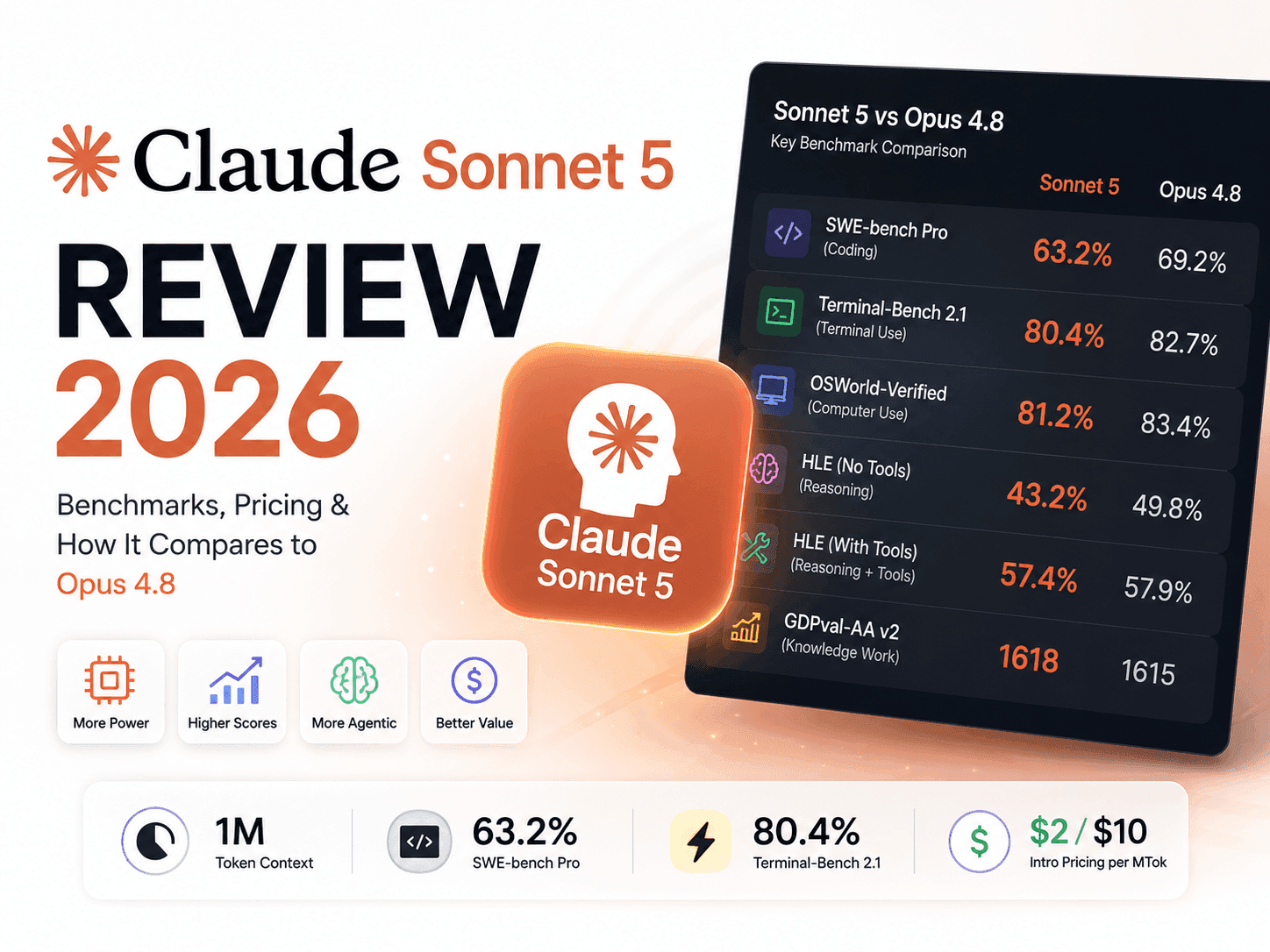
Claude Sonnet 5 Review: Benchmarks, Pricing & How It Compares to Opus 4.8

Read More
Claude Opus 4.8 Review: The Most Honest Coding Model Anthropic Has Built
AI Coding ToolsAI Chatbots
HyzenPro EditorialMay 28, 202612 min

Claude Opus 4.8 Review: The Most Honest Coding Model Anthropic Has Built

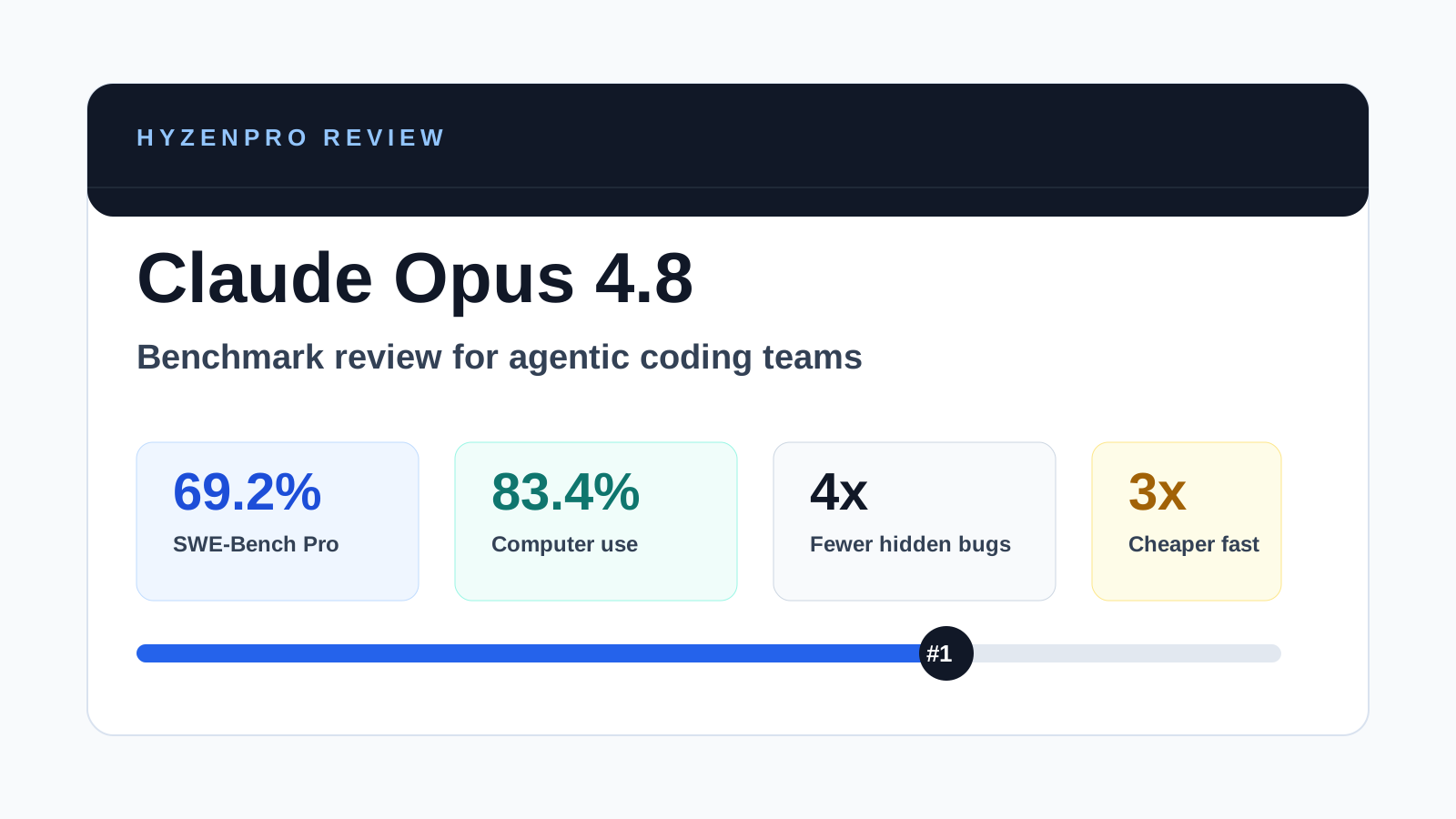
Claude Opus 4.8 launches May 28 with 69.2% SWE-bench Pro, 83.4% computer use, dynamic parallel workflows & Fast mode 3x cheaper. Full benchmark review.

Read More
OpenClaw Review: Best Open-Source Agentic AI Gateway for Messaging Apps (2026)
AI ToolsReviews
Rana AqibMay 24, 20263 min

OpenClaw Review: Best Open-Source Agentic AI Gateway for Messaging Apps (2026)

OpenClaw 2026 review — open-source agentic AI gateway for custom workflows, messaging integration, features, deployment, and pros/cons vs Hermes Agent.

Read More
HyzenPro

Independent reviews and side-by-side comparisons of the best AI tools for creators, marketers, developers and small teams. Reader-funded — never pay-to-play.

Featured Across Leading Platforms

Trustpilot logoProduct Hunt logoG2 logoIndie Hackers logoMedium logo

AI Tools

  • AI Tools Directory
  • AI Video Tools
  • AI Writing Tools
  • AI Coding Tools
  • AI Image Tools
  • AI Automation

Compare

  • Side-by-side Compare
  • Find Tools Quiz
  • Editor's choice
  • Buyer's quiz

Resources

  • Blog
  • How we review
  • Submit AI Tool

Company

  • About HyzenPro
  • Contact
  • Advertise
  • Privacy Policy
  • Terms of Service

© 2026 HyzenPro. All rights reserved. AI tool ratings are based on independent testing.

PrivacyTermsContactAdvertiseSubmit Tool

HyzenPro is an independent publication. Brand names and logos are property of their respective owners.