Best AI Coding Tools for Developers & Indie Hackers 2026 | HyzenPro
The Best AI Coding Tools for Developers & Indie Hackers in 2026
AI-assisted development has crossed the threshold from novelty to necessity. In 2026, developers who ship solo products or maintain small teams are competing directly with larger organizations that use AI coding agents for full-feature development. The advantage goes to engineers who choose the right tool for the right task — not just the most hyped model.
**The 2026 Developer AI Landscape**
The biggest shift in 2026 is the rise of agentic coding — models that don't just autocomplete lines but plan, execute, debug, and iterate autonomously. Claude 4.7 Opus and GPT-5.5 are driving this trend at the model layer, while purpose-built tools like Hermes Agent bring open-source agentic execution to indie hackers who want full control without API cost surprise.
**AI Coding Assistants & Copilots**
Claude 4.6 Sonnet (rated 4.8) is HyzenPro's top-rated coding model in 2026 — the industry sweet spot combining near-frontier intelligence with economical API pricing, making it the default for production workloads. GitHub Copilot (3.8) provides tight IDE integration and enterprise-grade security, with Copilot Workspace expanding into autonomous PR generation. Tabnine (3.9) is the privacy-first choice, running locally on your machine — critical for developers working with proprietary codebases.
**Agentic & Autonomous Coding**
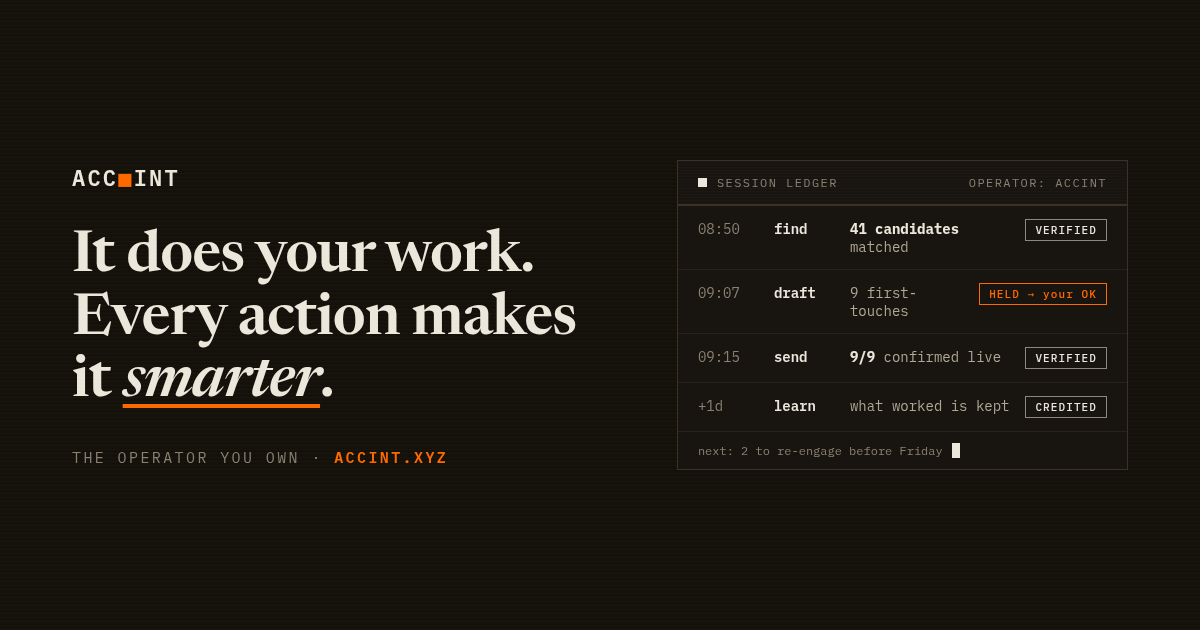
Hermes Agent (rated 4.9) is a standout open-source autonomous agent with cross-session memory and sandboxed execution — free to run and self-improving over time. AccInt is a local Work Model that trains AI coding agents from real execution outcomes, ideal for indie hackers building custom pipelines.
**Full-Stack & Cloud Development**
Replit (3.8) combines a browser-based IDE with AI-assisted coding, deployment, and database management — the fastest path from idea to deployed product for solo developers. Gemini Pro (4.7) offers a 2-million token context window, making it uniquely powerful for large codebase refactors and multi-file reasoning tasks.
**What to Prioritize at Scale**
At low usage, nearly any AI tool is affordable. The cost gap emerges at scale. Claude Sonnet and Gemini Flash offer the best cost-per-token ratios for production API workloads. For agentic tasks that run autonomously, always benchmark token consumption before committing to a paid plan.
Token costs spiral at scale
Autocomplete is not enough
Proprietary code needs privacy
Editor's top pick
Tabnine
★ 3.9
AI code completion assistant that runs privately on your machine.
Sound familiar? These are the daily friction points we hear from professionals like you.
Token costs spiral at scale
Most AI coding tools look cheap at low usage. At scale, costs can 10x between models. Understanding cost-per-token ratios is essential for production workloads.
Autocomplete is not enough
Line-by-line autocomplete was 2024. In 2026, agentic coding models plan, build, debug, and iterate autonomously — the gap between copilot and agent is a 5x productivity difference.
Proprietary code needs privacy
Many AI coding tools send code to cloud APIs. For proprietary or client code, self-hosted and local models like Tabnine and Hermes Agent keep code on your machine.
Your new workflow
A streamlined process that replaces hours of manual work with AI-assisted efficiency.
01
Plan & scaffold
Use GPT-5.5 or Claude 4.7 Opus to architect features, generate scaffolding, and write specs — treating them as a senior pair programmer.
02
Build & iterate
Claude 4.6 Sonnet handles production coding at the best cost-performance ratio. GitHub Copilot handles IDE integration and enterprise security.
03
Agentic execution
Hermes Agent or AccInt runs autonomous coding tasks — bug fixing, test generation, refactors — with cross-session memory and sandboxed safety.
04
Deploy & scale
Replit handles full-stack deployment from browser. Gemini Pro manages large codebase refactors with 2M token context.
The starter kit
Our curated top picks to get you started immediately.
Quick answers to common questions from professionals in your field.
Claude 4.6 Sonnet (rated 4.8) is HyzenPro's top pick for production coding in 2026 — combining near-frontier intelligence with economical API pricing. For the most complex reasoning tasks, Claude 4.7 Opus (4.9) leads, while Hermes Agent (4.9) is the best open-source autonomous agent.
Cost varies dramatically by model. Claude Sonnet and Gemini Flash offer the best cost-per-token ratios. A solo developer might spend $20–50/month. A team running agentic workflows at scale can reach $500–2,000/month. Always benchmark before committing to a paid plan.
Gemini Pro's 2-million token context window makes it the strongest choice for large codebase refactors and multi-file reasoning. Claude 4.6 Sonnet handles most production-size repos effectively. For enterprise legacy codebases, consider running multiple models for different tasks.